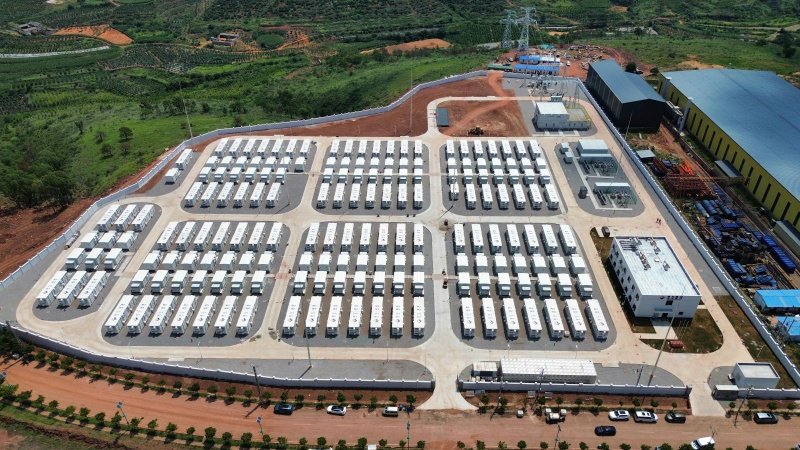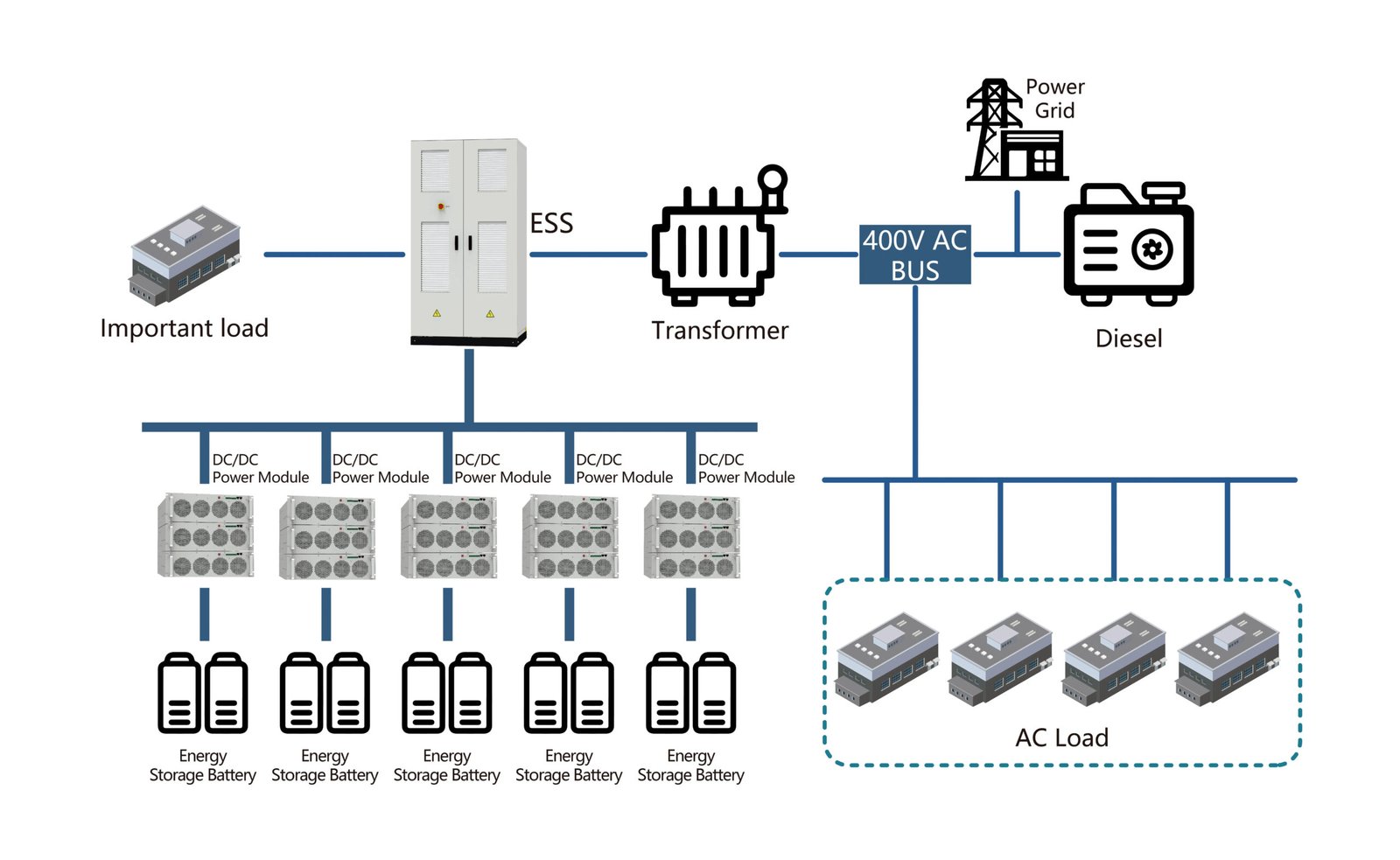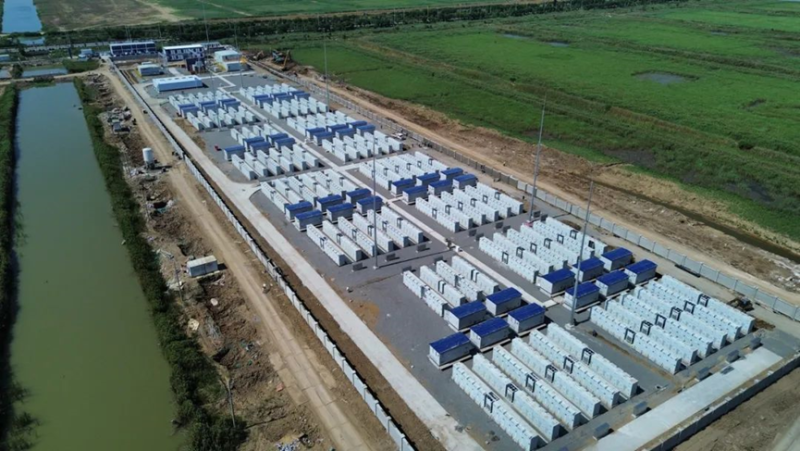
The Binhai Energy Storage Project in Jiangsu adopts a 200 MW / 400 MWh string-configured architecture, making it one of the representative large-scale deployments of modular PCS design in China’s coastal regions. The project was developed to support local grid stability while managing the rising share of renewable energy in Jiangsu’s power mix. By using a string-type configuration, the system achieves finer granularity in control and enhanced redundancy, ensuring more stable operations under diverse grid conditions.
A key advantage of this project lies in its flexible scalability. Unlike centralized systems, each PCS unit operates independently, which not only improves overall system reliability but also simplifies maintenance and expansion. This design has proven particularly suitable for coastal areas like Binhai, where energy demand fluctuates and environmental conditions require resilient, adaptive storage solutions.
Beyond technical performance, the Binhai project plays a strategic role in local energy transition. It enables higher penetration of offshore wind and solar resources, supports peak shaving and frequency regulation, and reduces curtailment of renewable energy. As a result, it contributes significantly to Jiangsu’s carbon reduction goals while showcasing the practical benefits of large-scale string-configured ESS in China’s evolving energy landscape.